How to Determine the Pore Size of Your Filter – Complete Guide
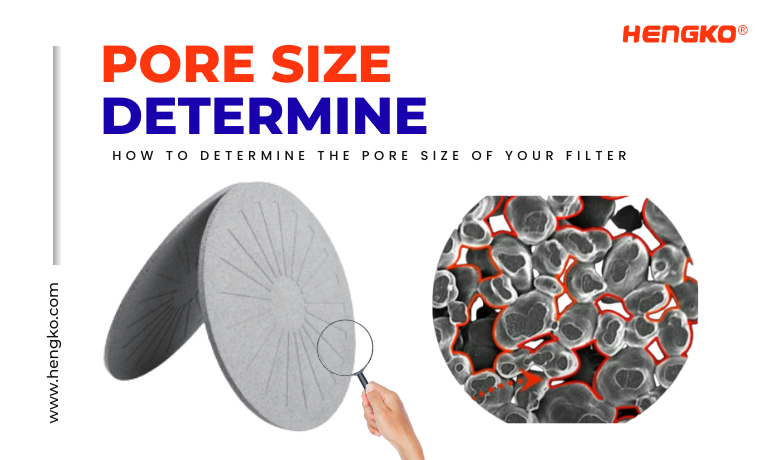
1.Pore Sizes: Why They Matter in Industrial Filtration and the Hidden Risk
Understanding why the correct pore size is critical for performance, safety, and cost. Pore size is one of the critical parameters that directly influence the physical properties and overall effectiveness of industrial filters.
1.1 The Hidden Risk: When the Wrong Filter Pore Size Shuts Down Production
Imagine you’ve just delivered a critical shipment of ultra-pure gas filters to a semiconductor factory. Within hours, the production line grinds to a halt. An urgent call comes in:
“Your filter clogged our system — millions of dollars in losses!”
The culprit? A single detail that was overlooked: the pore size of the filter wasn’t right.
1.2 Why Pore Size Accuracy Matters More Than You Think
-
80% of industrial filtration failures are directly linked to incorrect pore size selection.
-
In a semiconductor fab, every hour of downtime can cost $100,000+ in lost production.
-
In pharmaceutical manufacturing, one contamination incident can trigger a full batch recall, costing millions and damaging brand reputation.
A simple mistake in pore size can bring entire operations to a standstill.
1.3 The Core Question for Every Sourcing Manager
Whether you’re sourcing porous sintered stainless steel filters, OEM filter assemblies, or custom spargers, one critical question determines success or failure:
“How can I accurately determine the pore size of my filter before it’s too late?”
This complete guide will walk you step-by-step through everything you need to know — from pore size basics to advanced testing methods — so you can:
-
Avoid costly mistakes
-
Protect your production lines
-
Make confident sourcing decisions
2. Understanding Filter Pore Size: Key Concepts Every Buyer Must Know
When sourcing porous sintered metal filters, understanding pore size is essential for making the right purchasing decision. These filters are examples of porous materials with a complex porous structure that determines their filtration performance.
This section will help you grasp the fundamentals, so you can choose filters that match your application and prevent costly mistakes.
2.1 What is Pore Size in Sintered Metal Filters?
Pore size refers to the diameter of the tiny interconnected openings within a porous filter material.
In sintered stainless steel filters, these pores are created during the sintering process, where fine metal powders are fused under heat and pressure. The resulting pore morphology, including pore shape and connectivity, plays a crucial role in determining filter performance.
Key Metrics You Need to Know
-
Average Pore Size (µm):The statistical mean of all pore diameters in the filter media, also referred to as the average pore diameter. Used for general flow and filtration performance calculations.
-
Absolute Pore Size (µm):The size of the largest pore present in the filter. Some measurement techniques, such as capillary flow porometry, focus on only the diameters of the through pores, not their volume. Critical for applications requiring strict particle retention and compliance.
-
Pore Size Distribution:A full profile showing the range of pore sizes. Helps assess filtration consistency and predict performance under different operating conditions.
Tip: A visual cross-section of a sintered filter can reveal the uniformity of the structure, a key quality factor in high-performance filters.
2.2 Why Pore Size Matters in Filtration
Selecting the correct pore size isn’t just about filtering particles — it impacts your entire operation, including efficiency, safety, and cost. Pore size directly influences fluid flow and fluid movement through the filter, affecting both filtration efficiency and overall operational performance.
Benefits of Matching the Right Pore Size
-
Proper Particle Retention:Prevent contamination of sensitive products or systems.
-
Optimized Flow Rate & Pressure Drop:Balance between high filtration efficiency and smooth operational throughput. Proper pore size selection also enhances mass transport, ensuring efficient movement of particles and fluids through the filter media.
-
Longer Filter Lifespan:Reduces replacement frequency, lowering total cost of ownership.
Real-World Consequences of Choosing the Wrong Pore Size
-
Pharmaceutical Industry:
A miscalculated pore size can lead to batch contamination, triggering recalls worth millions. -
Gas Filtration:
Oversized pores allow impurities through, causing higher energy costs due to clogged downstream components. -
Chemical Plants:
Under-filtered or over-pressurized systems create safety hazards, including explosions and environmental violations.
Bottom line: The right pore size is your first line of defense for quality, compliance, and cost control. To learn more about the importance of porosity in metals, read our article: Is Metal Porous ? Got Answer Just Read This.
2.3 Industry-Specific Pore Size Requirements
Different industries have unique filtration needs, and pore size requirements can vary dramatically. Different industries require filters with different pore sizes and different pore diameters to meet their specific application needs.
Here’s a quick guide to typical ranges:
|
Industry |
Typical Pore Size Range (µm) |
Purpose |
|---|---|---|
|
Semiconductors |
0.003 – 0.1 µm |
Ultra-high purity gas and chemical filtration to prevent wafer contamination |
|
Pharmaceuticals |
0.1 – 5 µm |
Sterile environments and aseptic processing |
|
Food & Beverage |
0.5 – 10 µm |
Preserve taste, safety, and comply with FDA standards |
|
Chemical Processing |
5 – 50 µm |
Catalyst retention, reaction control, and system protection |
|
Hydrogen & Energy |
Sub-micron (0.01 – 0.1 µm) |
Fuel cells and clean energy systems |
Example:For semiconductor gas lines, a filter with 0.003 µm pore size is required to meet high-purity standards, whereas in brewing, a 5 µm pore size may be sufficient to remove yeast or sediment.
2.4 Key Terms & Global Standards
To make informed decisions, you must understand terminology and international standards governing pore size ratings. These standards are grounded in principles from applied chemistry and pure and applied chemistry, ensuring scientific rigor in pore size measurement.
Nominal vs. Absolute Ratings
-
Nominal Rating:Indicates the filter can capture a percentage of particles at a given size, usually 60–98%. Example: A 5 µm nominal filter may let some particles smaller than 5 µm pass through.
-
Absolute Rating:Represents the maximum pore size, guaranteeing 100% retention of particles at or above the rated size. Note: Absolute ratings are often determined by the minimum pore size required to ensure complete retention of target particles. Example: A 0.1 µm absolute-rated filter will block all particles ≥ 0.1 µm.
Tip: For compliance-critical industries like pharma and semiconductors, absolute-rated filters are essential.
Global Testing and Compliance Standards
-
ASTM F316 – Standard for bubble point testing, a widely accepted pore size verification method.
-
ISO 4003 – Defines international procedures for determining the average pore size of porous sintered materials and includes methods for measuring porosity.
-
FDA/USP Class VI – Compliance requirement for medical and pharmaceutical applications, ensuring biocompatibility and safety.
3. How to Identify and Verify Filter Pore Size
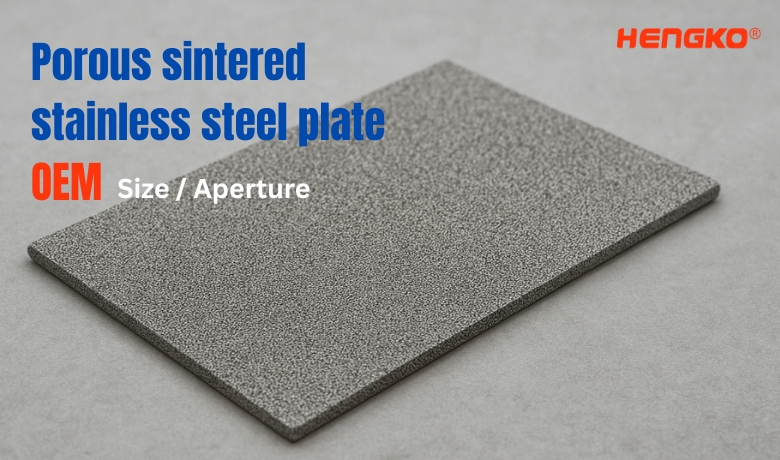
Selecting the right pore size isn’t just about reading a catalog spec. To ensure filter performance, compliance, and ROI, you need to verify pore size accuracy through proper testing and supplier evaluation. Accurate pore size measurement and measuring pore size distribution are essential steps in ensuring filter performance and compliance. This section gives you practical tools and methods to confidently make the right decision before purchase.
3.1 Common Methods for Measuring Pore Size
Different testing methods are used depending on whether you need basic pore size verification or detailed analysis. Here are the most common techniques:
-
Microscopic Imaging (SEM): Provides direct visualization of pore structure and size.
-
Capillary Flow Porometry: This method uses a capillary flow porometer to measure pore size distribution in a completely wetted sample. Applied gas pressure is gradually increased to overcome capillary effects and capillary forces holding the wetting fluid inside the pores. Surface tension plays a key role in this process, as it influences the pressure required to displace the fluid and empty the pores, allowing for accurate measurement of pore sizes.
Bubble Point Test (ASTM F316) – Industry Standard
-
How It Works:A filter is wetted with liquid, then gas is applied with gradually increasing applied pressure until the surface tension of the liquid in the pores is overcome and bubbles are seen escaping. The pressure at which bubbles first appear corresponds to the largest pore size.
-
Pros: Simple, cost-effective, accurate for largest pore detection.
-
When to Use: Ideal for gas and liquid filters in industries like semiconductors and pharmaceuticals.
-
Standard Reference: ASTM F316.
Tip: Always request bubble point test results when evaluating suppliers.
Mercury Intrusion Porosimetry – Full Pore Size Distribution
-
How It Works:Mercury is forced into the filter media under pressure, mapping a detailed pore size distribution and measuring the total pore volume. This allows estimation of the overall volume of pores within the filter media.
-
Pros: Provides deep analysis of pore uniformity and material structure.
-
Cons: Expensive, destructive test, requires specialized lab equipment.
-
Best For: R&D, critical applications requiring tight filtration tolerance.
Gas Permeability Method – Quick Factory Check
-
How It Works:Measures gas flow through the filter at a known pressure to estimate average pore size.
-
Pros: Fast and non-destructive.
-
Cons: Less precise than bubble point or porosimetry. Does not provide detailed information on pore size distribution or surface area, unlike gas adsorption techniques.
-
Use Case: Factory-level quality control or incoming inspection.
Flow Rate Method (Water or Air)
-
How It Works:Passes water or air through the filter at constant pressure to check flow performance against specifications.
-
Pros: Easy and practical for inline QC.
-
Cons: Cannot detect pore size distribution or largest pore size, and may not detect the presence of smaller pores that can impact filtration efficiency and flow performance.
Microscopic Imaging (SEM)
-
How It Works:Uses a scanning electron microscope (SEM) to capture high-resolution images of pore structure.
-
Pros: Excellent for research and material development.
-
Cons: Time-consuming, not practical for everyday QC. While SEM provides visual information, it does not offer quantitative data on pore volume or surface area, which can be obtained using vacuum volumetric techniques.
3.2 DIY Pre-Check Before Ordering
Before you order, answer these five critical questions to narrow down the right pore size and filter type:
-
What fluid or gas are you filtering?(e.g., ultra-pure nitrogen, sterile water, food-grade beer)
-
What is the smallest particle you must capture?(e.g., 0.1 µm bacteria, 10 µm yeast)
-
Required flow rate vs. allowable pressure drop?(High flow may require slightly larger pores.)
-
Operating temperature and chemical compatibility?(Stainless steel vs. Hastelloy or other alloys.)
-
Cleaning and maintenance requirements?(Backwashing, CIP systems, or disposable use.)
For more information about leading industrial filters manufacturers and solutions, explore our detailed guide.
After these, check industry standards and regulatory needs, and consider the relative abundance of different pore sizes within the filter media to ensure optimal performance.
Flow Chart: How to Choose the Right Pore Size
A simple decision-making flow can help:
-
Start with target particle size → match to closest absolute pore size.
-
Consider flow rate and system pressure → adjust if too restrictive.
-
Check industry standards and regulatory needs → refine choice.
-
Validate through supplier test reports or sample evaluation; consider measuring porosity as part of the evaluation process.
3.3 Troubleshooting Signs of Incorrect Pore Size
If your current filters are failing, here’s how to diagnose the issue:
|
Symptom |
Cause |
Solution |
|---|---|---|
|
Frequent clogging or short filter life |
Pore size too fine |
Select slightly larger pore size or improve pre-filtration |
|
Excessive pressure drop in system |
Pore size too fine or clogged filter |
Increase pore size or flow area |
|
Contamination in product or downstream equipment |
Pore size too coarse |
Use smaller pore size or switch to absolute-rated filter |
|
Unexpected production downtime |
Inconsistent pore distribution |
Request uniformity test (e.g., Mercury Intrusion) |
Quick Checklist:
-
Check upstream filters or pre-treatment steps.
-
Verify pore size rating matches actual application specs.
-
Review operating conditions vs. filter’s design parameters.
-
Review pore size distributions to identify potential causes of inconsistent filtration performance.
3.4 Comparative Pore Size Table – Industry Applications
|
Industry |
Typical Pore Size (µm) |
Common Fluid/Gas |
Example Use Case |
|---|---|---|---|
|
Semiconductor |
0.003 – 0.1 |
Nitrogen, Argon |
Ultra-high purity (UHP) gas filtration |
|
Pharmaceutical |
0.1 – 5 |
Water, Alcohol |
Sterile solution filtration |
|
Food & Beverage |
0.5 – 10 |
Beer, Milk |
Flavor preservation & safety |
|
Chemical Process |
5 – 50 |
Acids, Solvents |
Catalyst recovery, reaction control |
|
Hydrogen & Energy |
Sub-micron (0.01 – 0.1) |
Hydrogen, Clean Fuels |
Fuel cell system protection |
Use this table to benchmark your application needs. The table illustrates pore sizes ranging from sub-micron to tens of microns, depending on industry requirements, highlighting the importance of selecting the right pore size for optimal performance.
3.5 Supplier Verification Checklist
Even the best specifications mean nothing without trustworthy suppliers. Here’s how to confirm that a manufacturer’s pore size claims are accurate:
-
✅ Ask for pore size test reports performed according to ASTM F316 or ISO 4003.
-
✅ Request sample filters and conduct your own evaluation before placing a bulk order.
-
✅ Look for case studies or application examples in your industry
-
— these resources can provide valuable insights into the real-world performance of different pore sizes.
-
✅ Verify certifications such as ISO 9001, FDA compliance, or other relevant regional standards.
-
✅ Evaluate response time and technical support — a reliable supplier provides ongoing consultation, not just a sales quote.
4. Verify and Source the Perfect Filter Pore Size
Now that you understand the importance of pore size and how to identify it, the next step is
testing, verification, and selecting the right filter for your specific application.
We make this process easy and risk-free with tools, expert guidance, and reliable testing methods.
FAQs
Q1. How accurate are manufacturer pore size ratings?
Not all suppliers follow standardized testing methods.
At HENGKO, we use ASTM F316 bubble point testing and ISO 4003 pore size analysis to ensure accurate, verifiable results.
Q2. What’s the difference between bubble point and mercury intrusion methods?
-
Bubble Point Test: Detects largest pore size — ideal for quality control and production validation.
-
Mercury Intrusion Porosimetry: Provides a full pore size distribution — primarily used in R&D or critical tolerance applications.
Q3. How often should filters be tested for pore size?
-
Before initial purchase: Always verify with a test report or third-party lab.
-
During use: Annual testing or after major system changes ensures long-term performance.
Q4. Can pore size be customized for my unique application?
Yes! Our sintering technology allows precise customization of pore sizes, geometries, and materials to meet exact process requirements.
Q5. Is there a way to measure pore size onsite without lab equipment?
Yes, the bubble point method can be performed onsite using portable equipment for a quick pore size verification.
Q6. How does cleaning affect pore size integrity?
Proper cleaning (e.g., CIP or ultrasonic cleaning) does not alter pore size, but harsh chemicals or aggressive mechanical cleaning can damage the filter structure.
Always follow manufacturer guidelines to maintain filter performance.
Avoid costly contamination and downtime.
Get accurate pore size testing and expert guidance today.
Curious about innovative solutions for water quality?
Learn more in our Full Guide About What is Hydrogen Water.
Email: ka@hengko.com
Website: www.hengko.com